5 Essential and useful Tips For Hosting In Small Spaces
So many people opt out of hosting because they believe their small space can’t handle the type of hosting they would like to achieve. However, hosting in a small space, however you define small, is achieved through reframing. Reframing your space from something that doesn’t work to something you can make work, no matter the circumstances, will take you from a beginner host to an expert in no time.
Smaller spaces allow for more intimate affairs. It can also mean less cleaning and less decorating, which can be positive if you allow them to be.
I share tons of hosting tips, especially for hosting themed parties or dinner parties, but all of these tips and tricks can be adjusted up or down to fit or fill any space. Let’s cover the four essential tips for hosting in a smaller space and how to adjust for specific events.
Table of Contents
1. Optimizing The Space
The first step to hosting in a small space is to take stock of what you are dealing with and determine how to optimize the space you will be using. Optimizing your space means setting up the space for success in any way possible.
Clear off surfaces
Take stock of any countertops, tables, and pieces of furniture you will use during the event and remove anything unnecessary for the event. Your real estate is limited, and surfaces will often have to hold multiple functions, so having as much of that as possible is helpful.
rearrange furniture
Don’t be afraid to haul furniture to another place in your home. I place my coffee table in another room and my couch in the kitchen when I host dinner parties. Find ways to rearrange your furniture depending on the function you need it to serve. Here are a few ways rearranging furniture can be helpful.
- Creating floor space or room to move through the space
- Creating larger surfaces to use
- Adding seating to the main space
- Making room for additional furniture or larger set-ups ( e.g. dinner party table settings)

create zones/ hooks in more places
Determine and designate necessary zones, and then adjust them for your needs. There needs to be a place where people can enter and put their belongings down. You also need an area to eat and drink, and an entertaining area, if this is not the same as the eating area.
After creating the zones, add anything necessary for them to function optimally. One example is adding extra over-the-door hooks for coats and bags in your zone designated for guest storage. If that does not work in your space, create a separate area in a room or closet that serves that purpose.
a place for everything
Find a functional place for everything in your space. Those things that tend to linger about, go ahead and move them out of the way so that your guests don’t get stuck interacting with them.
Once you have found a place for your usual things, find a place for the items you will use for the event. You can designate a space for the trays you will serve from, the cups you will use, even the napkins. Doing this ahead of time will also allow you to ensure the spaces work well for their intended purpose.
adjust the temperature, music, and lighting
When you are hosting in a smaller space, body heat and voices can stack up quickly. Uncomfortable guests don’t hang around, so take the space into account when setting the atmosphere.
Drop the temperature a few degrees to account for extra people in an enclosed space. Also, ensure your music isn’t making it difficult to talk, or that it’s not blasting the ears of the guests sitting nearer to the speakers.
I always recommend lowering the lights; harsh lighting just does not bode well for setting a nice vibe. However, I really recommend it for smaller spaces to ensure that cozy vibe. People can be aware of themselves a bit more in smaller spaces, and lowering the lights creates a cozier, more welcoming atmosphere.
2. Double Duty and Multifunction
Multifunctionality is one of the keys to hosting in a smaller space. You want as many things as possible to pull double duty to account for lost spaces. Get creative and look at everything in your space with fresh eyes and a new purpose. Some ideas for multifunctional spaces:
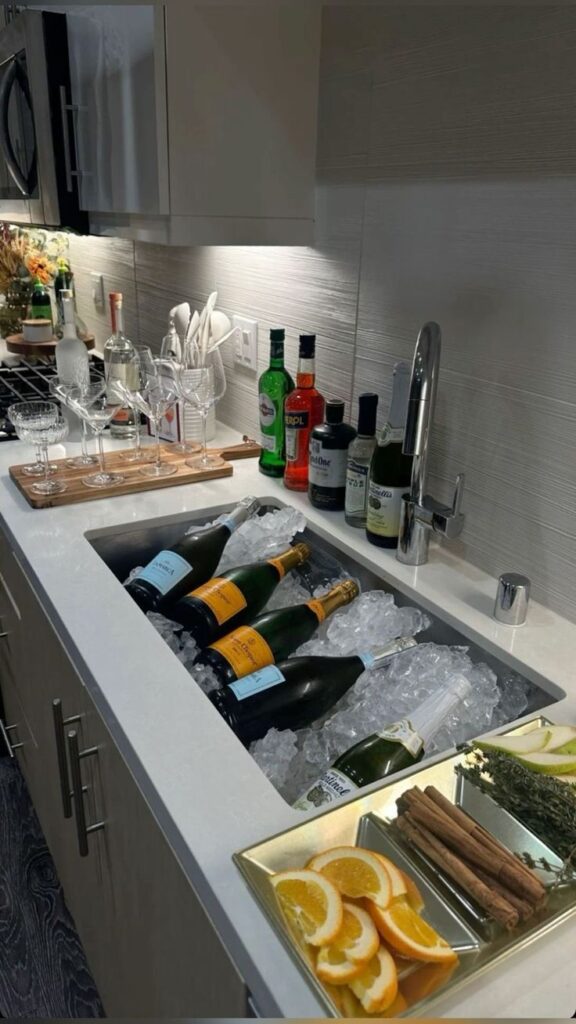
- Turn your sink into an ice chest, if you have a double sink, fill one side with ice and leave the other functional
- Mantles, sideboards, console tables, fireplaces, etc, can all be surfaces you create food, drink, or game stations on.
- Stools and ottomans can serve as side tables or coffee tables
Multifunctional spaces can also include transitioning a space. Removing some decor easily makes the dinner table a game table, so don’t be afraid to adjust, just consider it beforehand for a smooth transition.
3. Build Up
If you don’t have tons of space in the way of floor space, don’t forget to use other aspects to your benefit. Decorations can go on the walls, on cabinetry, or above. Take a look at the elements you want to present or have guests experience, and then consider them in atypical spaces
- Decorations on/hanging from the ceiling
- Table arches over the table
- Signage, menus, etc, can go on the walls

4. Be A Guest
For every event you host, you always want to take a moment and walk through your space as a guest. Specifically, you want to go through your space as a first-time guest. Imagine you have never been in your space before and see what stands out. Is it obvious where to put your coat or bag? Is the space easy to navigate? Can the bathroom be easily accessed?
Look at your space through the lens of a guest and then address any problems you come across. This is another benefit of setting up in the days leading up to the event.
This is also the time to check for accessibility of anything you’d like guests to interact with, without you. If you want self-serve drinks, make sure you create a space conducive to that. Don’t forget to ensure extra touches like phone chargers and blankets can also be easily directed to.
The last thing you want to look for, which can be even more essential in smaller spaces, is to make sure everything in the space is safe with more bodies. If people end up squeezing past one another or standing closely, is there anything that could be bumped into, knocked over, or broken in the process?
These tips can work for any event. However, at the time of writing this, we are in the holiday season, where more people find themselves trying out hosting. So here are some ways to make these specific events work in smaller spaces.
5. Preparation Is Key
As I am constantly preaching, the more you prepare, the smoother the event will go. Unless you are obsessing, you can’t prepare too much or too soon. This is even more essential when you are working with limited space.
You can even craft your menu around what you need to prepare and how they need to be prepared. Batch cocktails free up the bar space, while pre-prepared appetizers allow you to have food to serve without using your kitchen the night of. You can even decide on your menu based on how many items can fit in your oven and on your stovetop simultaneously.
Hosting Thanksgiving in a Small Space
Hosting Thanksgiving in a small space means that most of the activity will take place around the dinner table, so to optimize the decor and vibes, let your table be the centerpiece and statement of the room. Create an unexpected tablescape based on your theme.
Decide if buffet style or family style works best for your space and design your other zones around the main dinner.
Thanksgiving appetizers and cocktails allow for time for guests to get comfortable in the space, so choose creative options that don’t require people to linger in one spot.
Hosting Friendsgiving in a Small Space
For hosting Friendsgiving, it’s best to combine the tips from this post and my post on how to host a Friendsgiving in style. For hosting in smaller spaces, choose a theme that feels cozier and more intimate. Those themes work well in small spaces while also creating the perfect vibes for a Friendsgiving.
Hosting Christmas in a Small Space
If you are hosting Christmas with limited space, consider creating two key zones, one for dinner and one for gift exchanging. If these need to be in the same space, think about how and when you will transition the space.
A quick way to ruin a small space is chaos and clutter, so be prepared to gather wrapping and trash to keep the space functional and fun.
Hosting New Year’s Eve in a Small Space
Hosting a New Year’s Eve party means that you can allow the zones you curate to be a bit more fluid. People are expecting to move around, snacking, drinking, and mingling. However, if you plan to have an activity, ensure you create a space just for that activity, and make sure it functions well.
New Year’s Eve is also the time to pull out your fun, glitzy decor pieces that reflect lots of light with little effort. These will fill the space without physically taking up real estate. Think tinsel, shiny garland, metallic balloons, or disco balls.
The ultimate small space party hosting tip is to start thinking about how you want to use the space early, this gives you time to walk and live in your space with the event in mind. You will find yourself coming up with ideas in the moment. Don’t forget to look up lots of party inspiration and take a look at how they’ve set up their space for more useful inspiration.